
Power Line · Diesel and gas generator sets
Lower fuel costs for the power you generate.
On-demand HHO added to your generator's air intake, with controls, safety interlocks and measurement built in. For gensets from 5 to 320 kVA — no hydrogen storage on site.
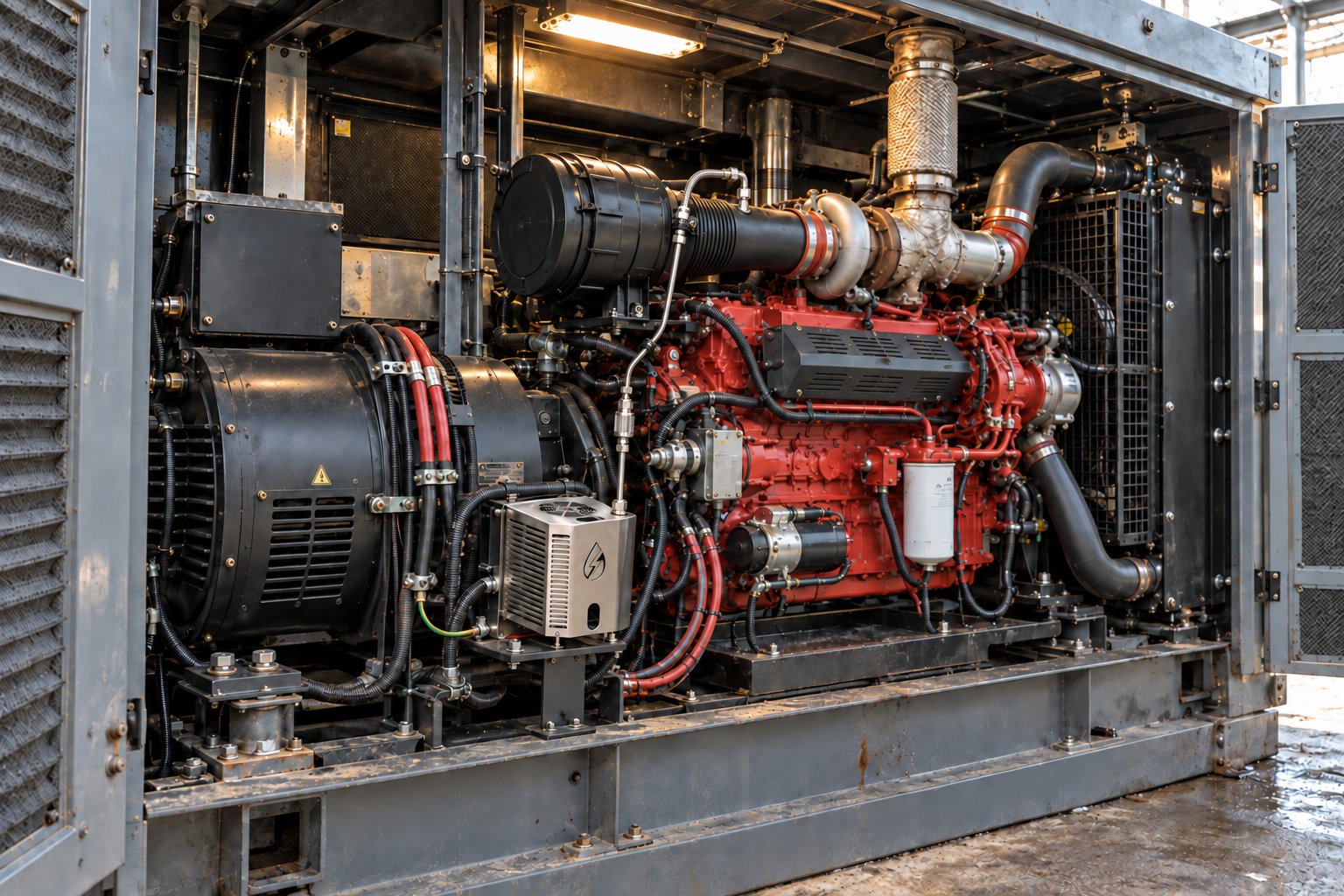
* Reference range by generator size and load. Results are site-specific, net of the electrolyzer's own power use, and confirmed by measurement — not a universal guarantee.
Applications
Where every liter of fuel counts
The best candidates run many hours a month on expensive or hard-to-deliver fuel.
Off-grid and islands
Prime power where diesel arrives by ship or truck at a premium.
Continuous-duty plants
Hospitals, data centers and telecom sites with long monthly run hours.
Industry and construction
Oil and gas, mining, agribusiness and job sites with their own generation.
Engine-driven equipment
Pumps, compressors and light towers running on diesel or gas.
AHAC™ technology
How it works
Gas is made only while the generator runs, then sent through a protected gas train into the engine's air intake.
01
Water + electrolyte
EFENA-specified electrolyte, dosed automatically.
02
P-series reactor
Produces HHO on demand, sized to the generator.
03
Protected gas train
Separation, drying, check valves and flashback arrestor.
04
Engine air intake
HHO enters with the intake air for more complete combustion.
Safety
Protection engineered into every unit
No hydrogen storage
Point-of-use production, only while the engine runs.
Flashback protection
Flashback arrestor and check valves on the gas line.
Pressure control
Pressure sensing, mechanical pressure switch and relief.
Continuous monitoring
Temperature, level and electrolyte concentration.
Automatic shutdown
Electrical protection and alarms on any abnormal condition.
Site-specific engineering
Every installation gets its own safety review; existing generator controls stay intact.
Models
Choose by generator size
Find your generator's kVA on its nameplate. EFENA engineering confirms the final model from your takeoff.
| Model | HHO output | Generator size | Reference savings* |
|---|---|---|---|
| P16-11P | 0.83 LPM | 5–15 kVA | 20–35% |
| P16-21P | 1.58 LPM | 15–45 kVA | 20–35% |
| P16-41P | 3.09 LPM | 45–90 kVA | 15–30% |
| P20-41P | 5.10 LPM | 90–160 kVA | 15–30% |
| P24-41P | 7.62 LPM | 160–320 kVA | 15–30% |
Power draw at 12.2 V · Reactor hardware shared with the Mobile Line · * Reference range; actual results depend on generator size, load and condition, and are confirmed by measurement.
Measured results
We report net benefit, measured on your generator
What we measure
- Fuel consumed — flow meter or calibrated tank
- Energy delivered by the generator (kW, kWh)
- Electrolyzer electricity use (kWh)
- Water and electrolyte use
- Run hours, load and ambient conditions
- Optional: O₂, CO, CO₂ and NOₓ in the exhaust
Key metric
Liters of fuel per kWh generated
Compared with HHO on and off at the same load, in repeated test sequences with calibrated instruments. Because the electrolyzer runs on the generator's own power, its draw is always counted.
Process
From takeoff to fleet in six steps
1
Qualify
Equipment, hours, fuel and goals
2
Design
Model, integration point, controls, acceptance criteria
3
Baseline
Measure current fuel use first
4
Install
Commission and train operators
5
Validate
On/off tests and net benefit
6
Scale
Monitor and roll out to more units
Get started
Start with a takeoff. Get a preliminary evaluation in 5 days.
One form covers several generators. Site-wide data is entered once per visit.
What we'll ask for each generator
- Make, model and kVA rating
- Average operating hours per month
- Fuel type — diesel, gasoline, natural gas or propane
- Fuel cost per liter, gallon or unit
- Photos of the nameplate, engine and air intake
Frequently asked questions
Does HHO create energy?
No. HHO is made with electricity from the generator itself. The goal is more complete combustion of the fuel you already burn, and we report the result net of that electricity.
Is hydrogen stored on site?
No. Gas is produced on demand, only while the generator runs, and passes through flashback and pressure protections.
How will I know it's working?
We agree on a baseline and acceptance criteria before installing, then compare fuel per kWh with HHO on and off at the same load.
Which generators does it work with?
Diesel and gas generator sets from 5 to 320 kVA. Larger or unusual units: send us a takeoff and we'll assess them.
Distribute the Power Line in your region
Training, engineering support and measured results for industrial distributors and integrators.