Onboard hydrogen for fleets that run on fuel.
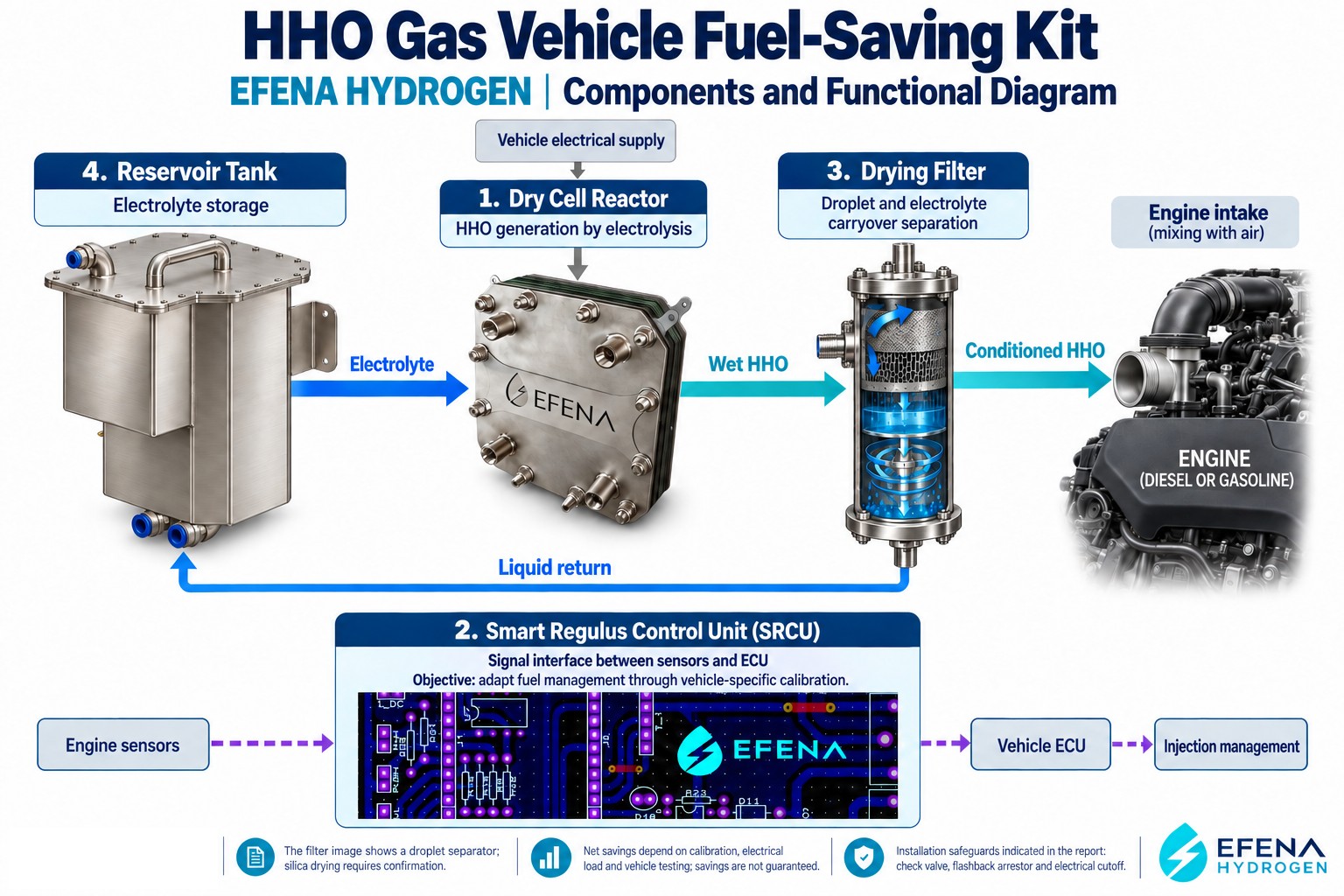
The Electrolyzer W Mobile Line produces oxyhydrogen (HHO) onboard and feeds it into the engine's air intake for more complete combustion, lower fuel consumption and lower emissions, with no changes to internal engine components.
HHO is produced onboard and used immediately.
A compact electrolyzer splits water into hydrogen and oxygen using the vehicle's own power. The gas goes straight into the air intake, where it helps the fuel burn more completely.
There is no pressurized hydrogen tank on the vehicle: the gas is produced only when the engine needs it.
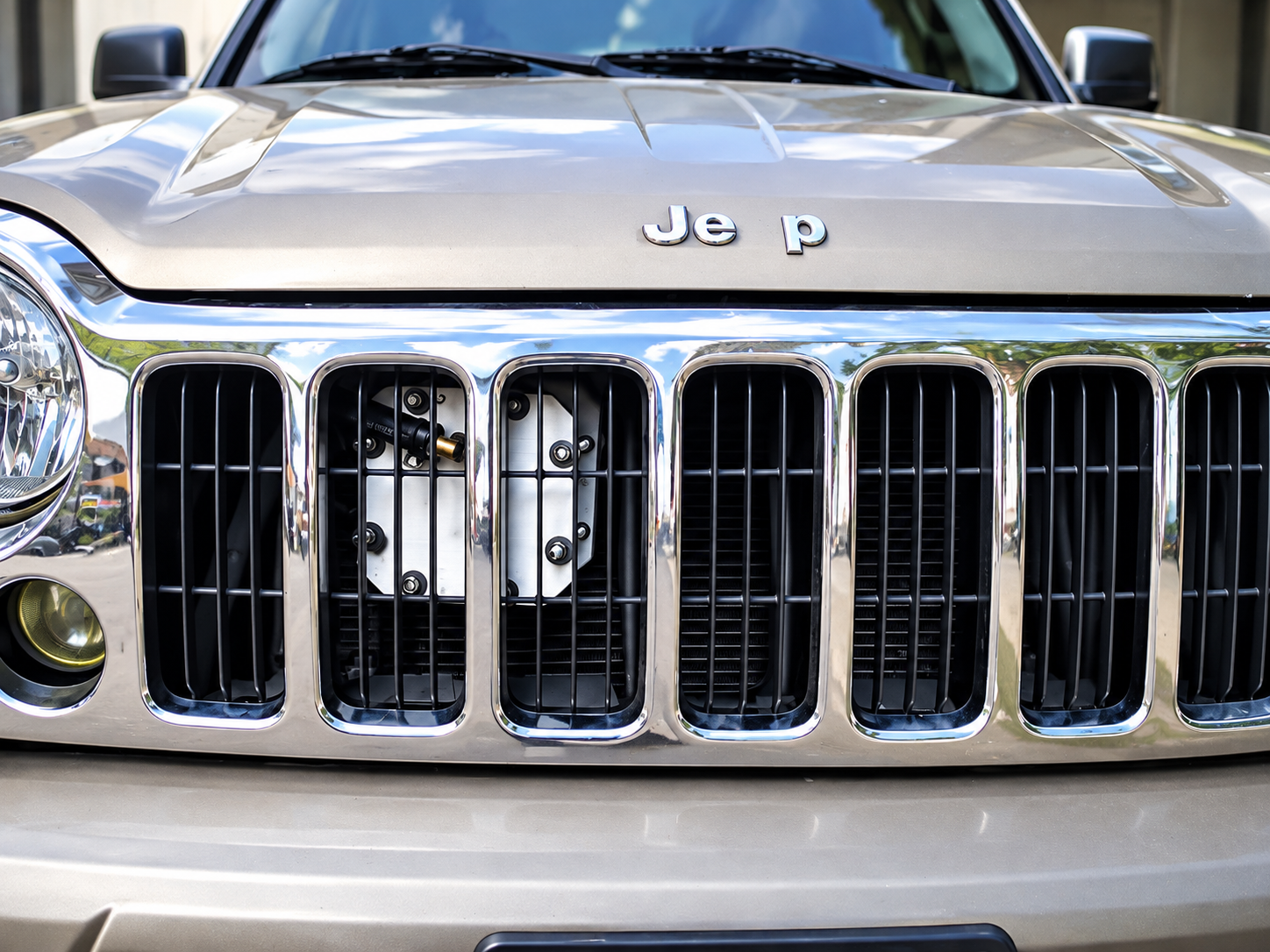
A small amount of hydrogen helps all of the fuel burn better.
Hydrogen carries about three times more energy per kilogram than the diesel or gasoline your engine burns. Efena's system does not replace your fuel: it adds a small, continuous flow of HHO to the intake air, so hydrogen's energy and fast flame help the conventional fuel burn more completely.
Energy per kilogram of fuel
About 3× the energy in every kilogram, so even a small hydrogen flow takes an active part in ignition.
More energy in every gram
With roughly three times the energy of conventional fuel per kilogram, the hydrogen in the intake air adds energy exactly where combustion begins.
A faster, more complete burn
Hydrogen ignites easily and burns quickly across a wide range of air-fuel mixtures. That helps the flame spread through the cylinder, so less fuel leaves the engine unburned.
A cleaner engine, all the time
More complete combustion leaves fewer carbon deposits on pistons, valves, injectors and the exhaust path. The system works every time the engine runs, so it counters carbon build-up continuously instead of in occasional cleaning treatments.
Energy figures are per kilogram of fuel: hydrogen at 142 MJ/kg and conventional diesel or gasoline at about 45.8 MJ/kg. Net fuel savings and deposit reduction depend on engine type, calibration, duty cycle and the engine's starting condition, and are verified on each installation.
Less fuel, fewer emissions, no engine modification.
Lower fuel costs
20–40% savings, depending on vehicle type, duty cycle, driving conditions and engine condition.
Non-invasive
Connects to the air intake without modifying internal engine components.
Gas on demand
HHO is made and used immediately. No pressurized hydrogen storage is required.
Lower emissions
Less fuel burned means less CO₂, with more complete combustion.
Sized to the engine
Five models cover engines from under 1 liter to heavy-duty diesels above 7 liters.
Installation and training
Installation, commissioning and operator training by Efena or its certified installers.
Select by engine size.
| Model | Output | Engine range | Savings |
|---|---|---|---|
| M16-11P | 0.83 LPM | 0.8–1.6 L gasoline | 20–40% |
| M16-21P | 1.58 LPM | 1.6–2.5 L / diesel to 3.0 L | 20–40% |
| M16-41P | 3.09 LPM | 2.5–4.0 L gasoline/diesel | 20–40% |
| M20-41P | 5.10 LPM | 4.0–7.0 L diesel | 20–40% |
| M24-41P | 7.62 LPM | 7.0 L+ heavy diesel | 20–40% |
Power consumption at 12.2 V. Savings vary by vehicle type, duty cycle, driving conditions and the engine's starting condition.
From starting point to verified savings.
Find out how much your fleet could save.
Tell us about your vehicles, engines and monthly fuel spend, and we will size the right system and estimate your savings.